10.6.22

Camino de Santiago 11 - Castrojeriz to Carrión de los Condes (Electric wheelchair style)

With beautiful morning light the path ascends back to the high Meseta plateaux


With caution to save on battery I got off and pushed my wheels on the steeper parts of this climb. I don't think this was strictly necessary as I'm sure I would have managed without, but the possibility of  running out of charge is always present when you travel by battery. With an electric bike you can always pedal on or even push it with relative ease. With a 2 wheeled, self-balancing wheelchair, without battery power you are dead in the water. 

There is also an issue with the time it takes to recharge my ultra high capacity batteries. With standard 5.6 Ah lithium batteries the charge time of the Segway that powers my Genny wheelchair is about 8 hours. The ultra high capacity batteries I have fitted are reported to to take 16 hours for a full recharge from empty. As I was planning covering 2 stages to Carrión de los Condes (44km) I thought it wise to preserve capacity where I could

The view back to Castrojeriz was stunning and life felt good to be on the Meseta stages.


Up on the Meseta the landscape was the same with high cereal agriculture, mountains to the north and lovely wildflowers along the path.   

The Way took me to the villages of Itero de la Vega, Boardilla del Camino, Frómista and several smaller villages. The water in the river valleys looked inviting and was always spanned by bridges that are probably Roman in origin

Crossing the rio Pisuerga 

Part of the canal system at Frómista

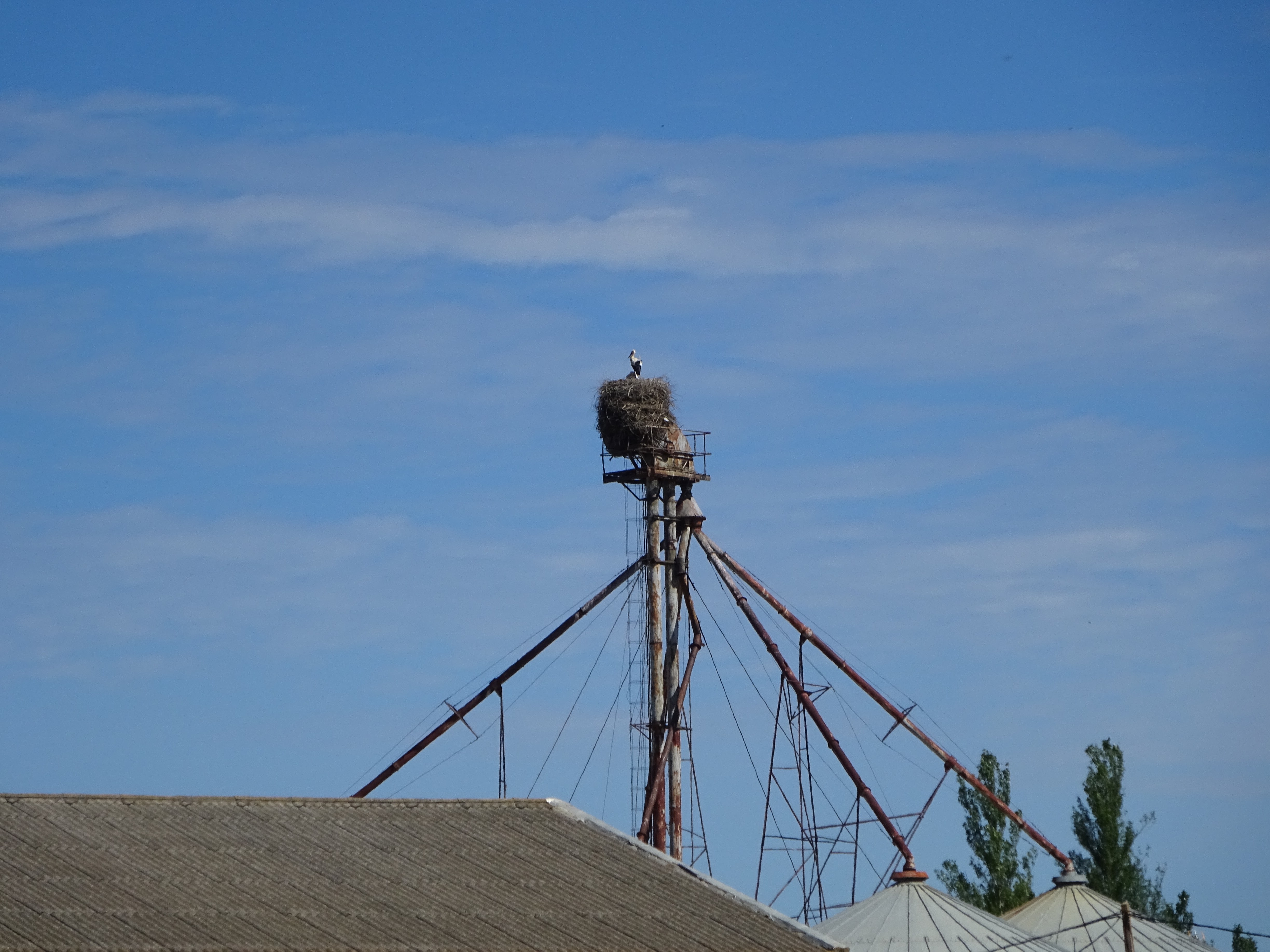
Storks nest on convenient high perches, in this case the top of a grain silo system  


The latter part of this section runs adjacent to a small road. Lots of pilgrims dislike these sections preferring a more remote path. I'm ok with them, soaking up the warmth and just enjoying the afternoon
 

In Carrión de los Condes I stayed at the Hostel of the Filipense Sisters. The accommodation was €22 with lovely beds, proper sheets and hot showers. Unfortunately it was deserted with no pilgrim merriment. I amused myself eating avocado, cheese, ham and crisps with my feet in the river 

* NEXT

9.6.22

Camino de Santiago 10 - Burgos to Castrojeriz (Electric wheelchair style)

A beautiful day on the Camino in gently rolling fields of wheat and barley.

 After the small villages of  Villalbilla, Tardajos and Rabé de las Calzadas the path ascends. This is the official start of the Meseta, a high flat plateau dipping into occasional valleys with isolated villages often with houses of adobe construction (bricks made of earth straw and other organic materials)

The ancient and deserted village of Hornillos del Camino 

After Hornillos the path ascends again into beautiful postcard fields awash with poppies


Poppies are an emblematic species and dear to me. A plant with an ancient association to humans, poppies are the source of opium that has been used since prehistoric times for medicine and pleasure. The connection with the first world war where it's seed's capacity to germinate and flower in disturbed soils saw it colonising in landscapes torn apart by war. If those battlefields had looked anything like the riot of colour and beauty of the Camino poppies you can imagine hope entering the world again    


Hontanas


This was to be be along day where I covered 40.4km. I continued beyond San Anton where a small road cuts right through an archway of the now ruined monastery. There was an option to stay in a tiny albergue built into these ruins but didn't provide electricity which I'm dependant on to charge my wheels for the next days travel 
 
Ruins of an ancient monastery - San Anton houses a basic Albergue built into the site

My destination for the night was the small town of Castrojeriz built into the hillside beneath a ruined castle. I stayed in the Rosalia Pilgrim Hostal that had good reviews and deserved them. The Rosalia turned out to be a 16th century hostel built over several floors with a covered courtyard where I ate the Pilgrims menu.


Others staying at the hostel made the the stiff walk up to the castle ruins. I washed and dried my cloths and researched the next days route


Entry to this Albergue was via a series of steps at the back door which I was helped through by the proprietor. Minor obstacles like this were ever present on the Camino. I do not know how a pilgrim completely dependant on their wheelchair would manage unsupported but for me there were always people to help 
 

8.6.22

Camino de Santiago 9 - Villambistia to Burgos (Electric wheelchair style)

The route today left the big open agricultural landscapes and climbed into the wooded hills to a height of 1120m. The terrain was a mix of planted conifers and local indigenous oak woodland mainly on clay or stoney soils. 

A constant climb into woodlands

Conifer plantation

The straight lines of a conifer plantation make for an alien environment where the heavy shade stops everything but hardy grasses and bracken from growing. I was to discover that within 2 weeks of crossing this section,  the path had been closed due to raging wild fires in the area


At higher altitudes remnants of the natural upland heath remained in glades. Heather and rock roses bloomed along with the odd orchid. There is a simple monument marking the site of a shallow grave from Spain's the civil war. Its easy to forget that until relatively recently Spain as a large and diverse nation had a very difficult past
 
San Juan de Ortega
The path drops down to San Juan de Ortega where there is an Albergue and small café that was doing good business. I stopped for a homely lunch with a small coincidental meeting of English pilgrims.


After another short stretch of woodland the path descends into the small villages of Ages and Atapuerca before rising again into a section of path with extremely difficult rocky terrain. Genny can handle most moderately rocky paths but very steep slopes, deep eroded gullies and places where rocks will snag the underside are not easily passable. I have developed a technique of putting Genny into slow mode, depressing the seat whilst guiding from the rear operates with full power as though there is a passenger riding it. This requires lots of practice and good control but this mode can sometimes get you over obstacles that are otherwise impassable


Most of this terrain was negotiable threading between the stones however I was assisted in a few places by helpful cyclists who had resorted to pushing their mountain bikes to the summit. The Cruz de Matagrande sits at altitude 1050m. The following photograph from my sister taken on a bleaker day shows the cross at the summit and the difficult rocky path 


A long ride down the other side leads through woods and fields eventually reaching the suburbs to Burgos.

Burgos is a delightful city. A blend of the ancient alongside wide treelined streets. The city is built on the river 'Rio Arlanzón' and Burgos is a UNESCO world heritage site named as a 'City of Gastronomy'. Ironically it was difficult finding somewhere to eat at a time that suited pilgrims. I risk generalising when I say that the Spanish seem to do most things late. Mornings seem to not happen till 9 ish lunch is 14:00 or 15:00 and people seem to not eat their evening meal at about 22:00 I guess being on the western end of the continent, the sun rises and sets later than the rest of Europe. The smaller villages servicing the Camino are open for coffee if nothing else so maybe its the Camino running in a different time zone altogether..


In Burgos I stayed in the Municipal Albergue de peregrinos Casa del Cubo, a big hostel sleeping 150 over several floors. This had excellent disabled facilities including single story beds as opposed to the more frequent bunks. 

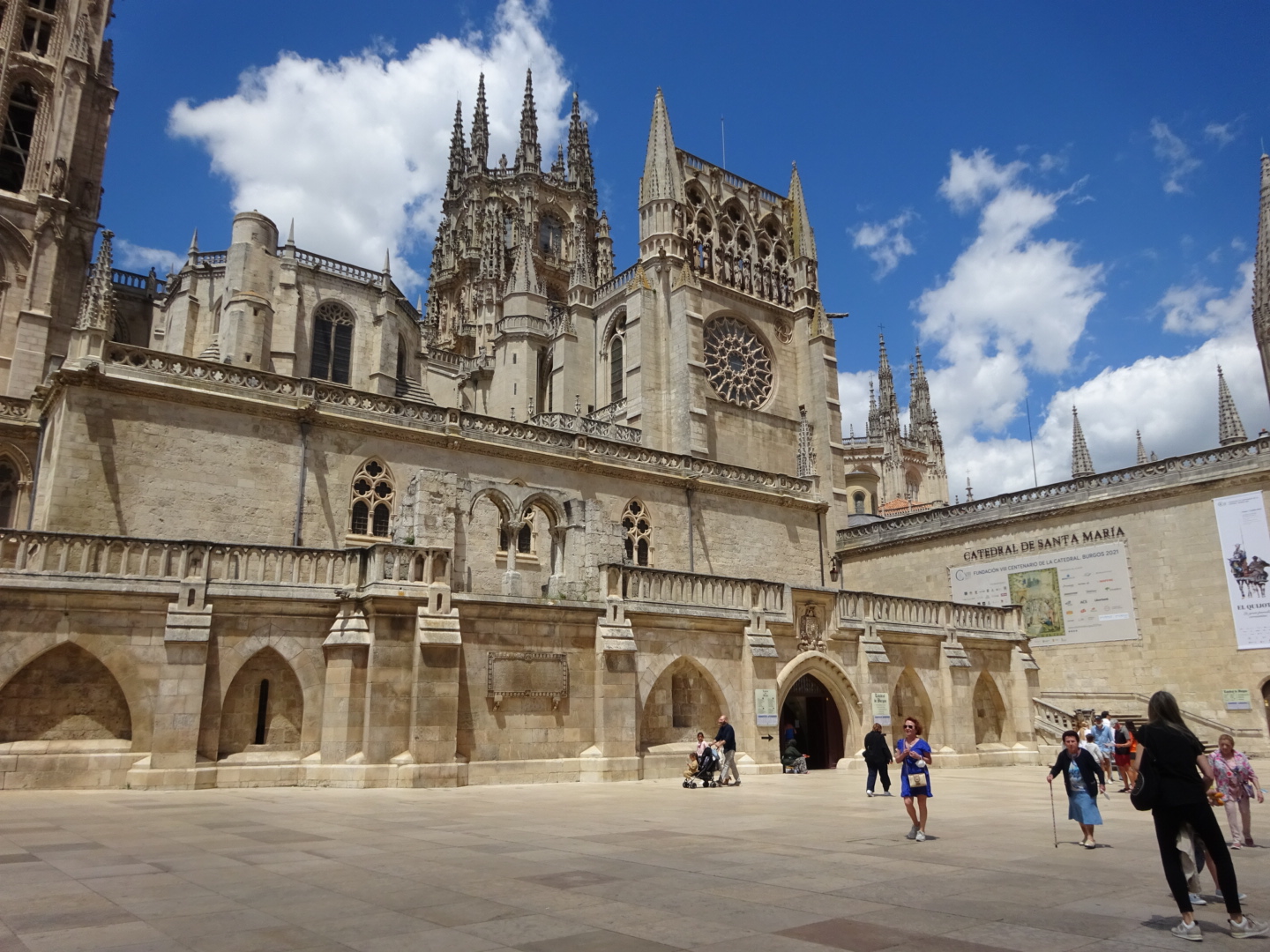
Gothic Cathedral of Saint Mary of Burgos

14th-century city gate, Arco de Santa María

7.6.22

Camino de Santiago 8 - Azofra to Villambistia (Electric wheelchair style)


Today was an easy day of good paths through open fields of mainly mixed cereals. These crops were accompanied by the cheery red poppies that dominated the verges along with the spiky teasels and odd pyramidal orchids


My wheels were proving more than capable for this journey. With the forward and backward movement of the Genny controlled by the your bodies position, distributing the weight and carrying essentials and supplies in a rucksack hooked on the back affects your centre of balance. My load is probably only about 7kg in a 26ltr rucksack with a sleeping bag hanging off the bottom, however I need to adjust the settings my move my seating position forward to counter the weight at the back

Beautiful cool Cathedral at Santo Domingo de la Calzada
The small towns of Ciruena, Santo Domingo de La Calzada, Granon, Viloria de la Rioja, Vilamayor del Rio and Belorado each have their own charm


I was travelling faster then most pilgrims on my wheels. These long easy sections make cruising comfortable and fast. I had started to cover about 40km a day which is a stretch for those on foot who would more commonly cover 20 - 30km a day. I did however meet several young men who claimed to had walked up to 75km in a day  

Many of the taller buildings have nesting cranes on their roofs


I stayed the night in a the tiny municipal Albergue San Roque in Villambistia. This was a lovely stop with friendly staff however I discovered in the morning that my wheelchair had been unplugged at some point in the night leaving me with less than full charge for the day ahead. The general etiquette on the Camino is lights out by 22:00 and vacate the place by 8:00 in the morning. Plugging my wheels back in and hanging about didn't go down to well. I wasn't actually thrown out but I only managed to stay till 8:30 before feeling less than welcome and left hoping I wouldn't run out of steam on the day ahead

6.6.22

Camino de Santiago 7 - Logroño to Azofra (Electric wheelchair style)

Four days before leaving for the second week on the Camino, the retractable support legs on my Genny Mobility wheelchair stopped working and stuck down. I would normally attempt this sort of repair myself but with so little time and requiring parts I had no option but to make a trip to the Genny Mobility factory in Switzerland. Getting this sorted meant a 1800 mile drive from St Malo in Brittany, France to Switzerland, before driving onwards to Logroño, Spain in my VW van to commence where I left off last October

Overall my wheels have been fantastically reliable with over 8000 miles on the clock in 6 years of operation. Apart from a few relatively minor issues, most of which were down to the Segway core power unit, Genny has been just great for a wheelchair that I ask so much of

Genny Mobility headquarters are based in Sant'Antonino in the southern, Italian speaking part of Switzerland. It is just up the road from the beautiful Lake Maggiore, where clear warm water is surrounded by tall mountains. Its about 40km west of Lake Como in Italy. After a long drive Genny Mobility were able to make the repairs which were down to the linear actuator which is a device a bit like a hydraulic ram you could see on a digger arm, however powered by 12 volts through a gear drive. Taking it all to pieces myself later I was able to see it was not down to faulty gears but a crack in part of the plastic moulded frame. This was not feasibly repairable without parts. I took the opportunity to have a full service whilst in the workshop   

Lake Maggiore borders both Switzerland and Italy

Logroño:

After a mad onward drive from Switzerland into Italy, the Mediterranean coast of France and into northern Spain I arrived in Logroño early evening giving me opportunity to visit the city, capital of La Rioja region. As with many cities and larger towns, Logroño has a beautiful historic centre complete with the Cathedral of Santa María de la Redonda

Unfortunately most Spanish Cathedrals seem to be accessed by flights of steps
 with generally poor disabled access 
  
Fantastic street art at a roundabout in Logroño   

With my van securely garaged, I commenced my second week on the Camino with a late 10 o'clock morning start in good weather. Anxious but excited I set off on my wheels with my small rucksack and sleeping bag hanging off the back. Because of the late start I had booked accommodation in Azofra 34km away

Pilgrims decorate the path adjacent to the road with home made crosses

The urban parts of of the Camino are generally less memorable excepting the historic town centres. Exiting Logroño however was through a series of lovely shaded green parks, before crossing a busy road and past a reservoir. the early route was part following the road and part in mixed agricultural land of cereals and vines

Following the yellow arrows of the Camino I passed the small town of Navarrete built on a hill and Nájera


Where a footbridge with steps crossed a stream leaving Nájera I was forced to find an alternative route and found a shallow section where I could wade my wheels without issue

Stream crossings need to be carefully negotiated with 22Ah of lithium batteries to consider
 
Many path edges and smaller fields in June were awash with poppies and other wild flowers

Lots of the building stone seemed to be pebbles shaped by water despite there being little
obvious water in the surrounding areas

I had made the decision on this section to stay in the smaller towns and villages where possible. I find the villages easier to navigate, they are simpler to shop and eat with a wheelchair but I was also considered the impact Covid over the last couple of years. With increasing urbanisation in the world these villages are probably only here because of the Camino. In Azofra I stayed in the Municipal Albergue which was a small and friendly hostel with a small courtyard water feature. With feet in the cool water I engaged with Camino life meeting Italians and Americans I would encounter again over the next days. How lovely to be back

* NEXT

31.10.21

Camino de Santiago Week 1 summary - Saint-Jean-Pier-de-Port to Logroño (Electric wheelchair style)

Week 1 of the Camino de Santiago was an awesome experience. I travelled about 170km from Saint-Jean-Pier-de-Port in the French Pyrenees to Logroño in northern Spain alone on my 2 wheeled electric wheelchair. It took me 7 days including a mad trip back into France to collect my VW van from a French campground. Starting in beautiful high mountain meadows I watched the scenery change to woodland, mixed arable and vineyards. I met loads of lovely people who were interesting, kind and open and discovered a beautiful historic Spain full of incredible architecture and culture that I didn't know existed


When I started I didn't know that I would be able to go the distance with my wheels, both literally with the battery capacity but also the capability of negotiating this route. It starts by going uphill for about 18km to an altitude of 1430m. This route is closed by law on the Spanish side throughout the winter months as conditions can be treacherous. Although it was a mild autumn day when I was there I encountered terrain I couldn't pass and was helped by some Spanish pilgrims who literally picked up my wheelchair and moved it past the steep rocky bit

Route markers used in many towns

In distance travelled I have probably done about 1/5th of the Camino but in terms of the challenge I am well on the way. My Genny wheelchair coped with difficult terrain and I can't imagine there will be unpassable terrain ahead although I'm sure there will be difficulties. There were bits where I took an alternative route when the going looked extremely difficult or I was advised by fellow pilgrims but in all I feel like I did my stuff

I feel like I have been on this path for many years having only just begun a few weeks back. I will continue to the end and maybe beyond...

- Buen Camino -


* To view all these posts in chronological order please scroll down or click HERE

8.10.21

Camino de Santiago 6 - Los Arcos to Logroño (Electric wheelchair style)


This was to be my last day on the Camino so I left at dawn for a head start to the day. The countryside was similar to yesterday, arable fields, scrubby woodland and small villages connected by good footpaths


I breakfasted in in a Torres del Rio and came across this unusual 12 century church with 8 sides
 
12th century octagonal church

Today marked the end of Navarra and into the famous wine growing region of  La Rioja

The route was mainly on footpaths rather than agricultural tracks which was mostly ok with some exceptions. Having previously worked as a countryside ranger I have been responsible for constructing and the maintenance of many paths. Successful builds are about the management of water as erosion so easily destroys paths

Over the last few days I have discovered a method for negotiating obstacles that are either too steep, too rocky or just too narrow for my wheels. Genny wheelchairs have a riderless balance mode that is integral to the Segway core. This provides some assistance whilst not sitting on Genny and I frequently use this whilst loading my wheels up ramps into my van. It offers some drive capability but has low power when negotiating difficult terrain. Putting my wheels into slow mode (4mph, 6.5kmh), activating the seat switch so it behaves as though I'm sitting on it, and pushing from behind whilst steering gives me great power as well as control. I have become adept at this method and providing I have the energy to keep it all together, I'm overcoming all sorts of difficult terrain. If it all goes wrong I just release the seat down switch  


This magnificently built bridge offers pilgrims safety across the road, unless of course you are on a wheelchair. The addition of some planks was obviously an afterthought for cyclists. A short detour and a mad dash across the road was the final obstacle before reaching the small city of Logroño

Crossing the bridge to the city of Logroño

This was to be the end of my Camino adventure for 2021. After getting my credentials stamped at the tourist office I headed for the bus station looking for a ride back to Puente la Reina where my VW was parked

Camino credentials

Your credentials work like a Camino passport and you get them stamped along the route to demonstrate and record your progress. I understand they are inspected at Santiago before you receive your Compostela or certificate of completion. There is something uniquely satisfying about this document and I will treasure it, keeping it safe till I'm back in 2022

* NEXT